Chess Guides and Game Review
Guides to chess rules, strategy and game review. To review your own game, use the chess analysis tool.
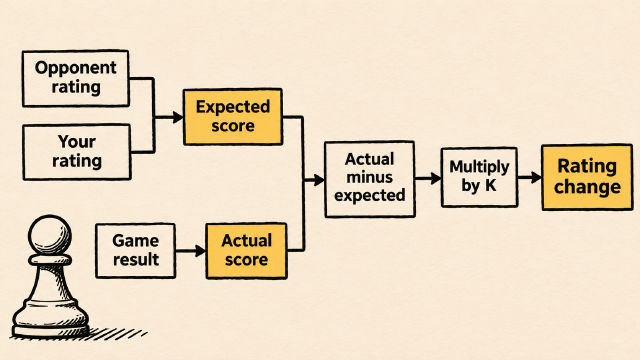 How the Chess Rating System Works on Chess.com, Lichess and FIDEUnderstand the chess rating system: how Elo and Glicko change your rating, why platform ratings differ, and how ratings relate to game accuracy.
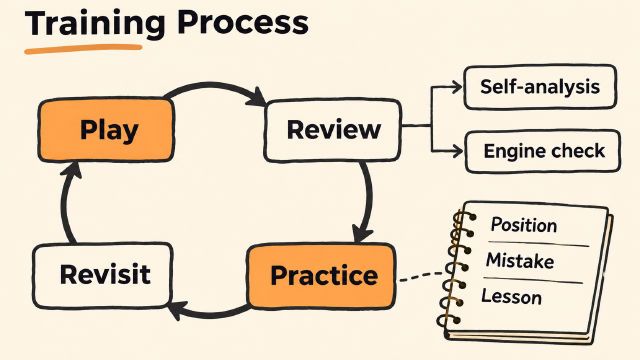 How to Get Better at Chess With a Game Review RoutineLearn how to get better at chess by reviewing completed games, finding recurring mistakes and turning them into a repeatable practice routine.
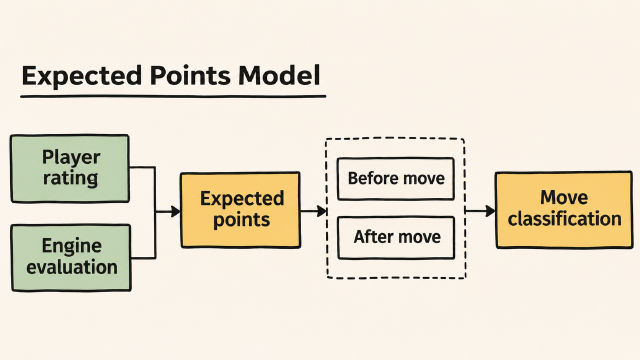 What the Blunder Definition Means in Chess.com Game ReviewUnderstand the blunder definition in Chess.com game review, how it differs from a mistake, and why the label depends on expected points.
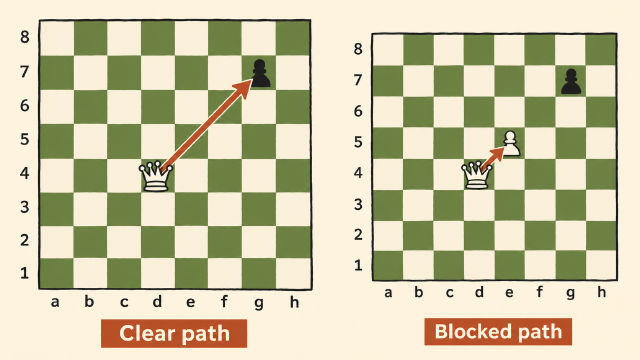 How the Queen Chess Piece Moves, Captures and Stays SafeLearn how the queen chess piece moves and captures, what its nine-point value means, and how to review queen-safety mistakes after a game.
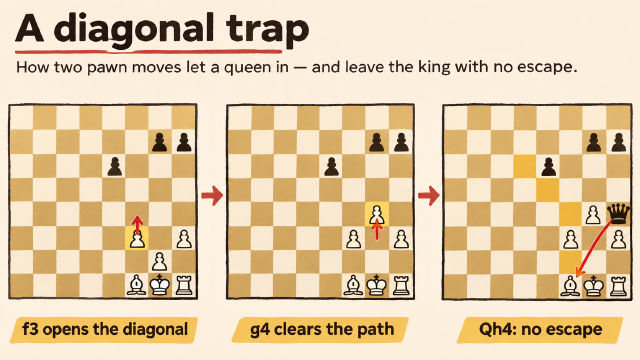 How Fools Checkmate Works and How to Avoid ItUnderstand fools checkmate, usually called Fool's Mate: the two-move sequence, why White cannot escape, and pawn mistakes to review afterward.
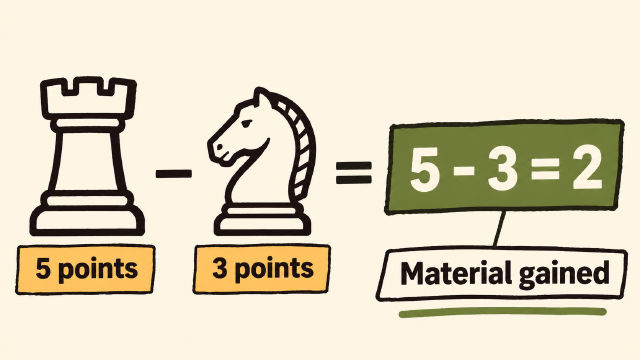 How to Use Chess Piece Points to Count Material and Compare TradesLearn chess piece points, count material after exchanges, and understand why activity, king safety and engine evaluations can outweigh the totals.
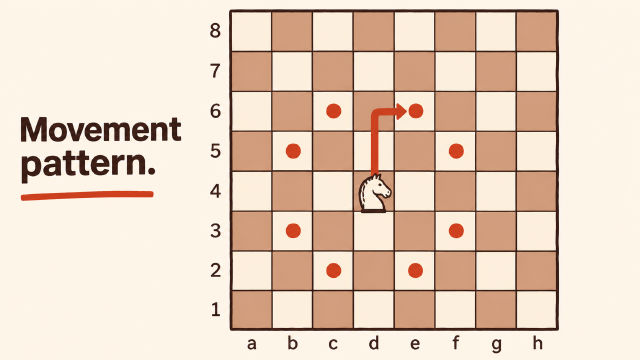 How the Horse Chess Piece Moves, Jumps and CapturesThe horse chess piece is the knight. Learn its L-shaped moves, how jumping and captures work, and how to recognize a knight fork.
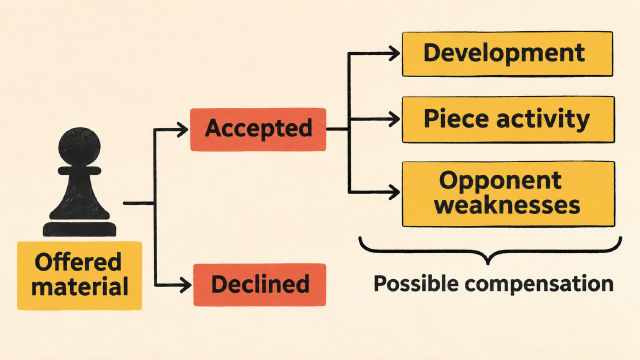 Gambit Definition: Why Chess Players Offer MaterialLearn the gambit definition in chess, what accepting an offer means, and how to assess material and compensation when reviewing a finished game.
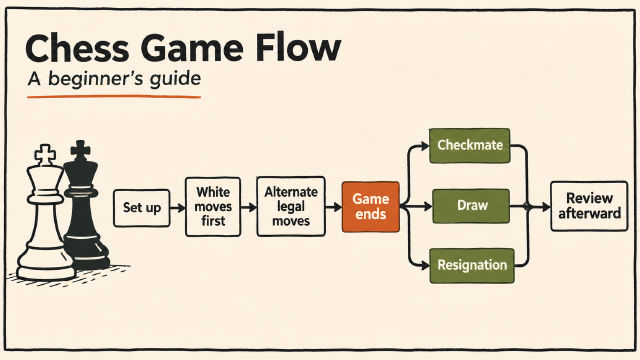 How Is Chess Played? A Beginner’s Guide to Your First GameHow is chess played? Learn board setup, piece moves, turns, special rules and game endings, then review your first completed game.
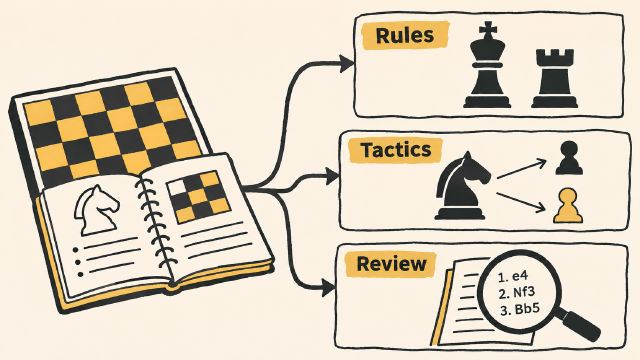 Chess Game Terms Explained for BeginnersLearn common chess game terms with simple examples, from checkmate and tactical patterns to material, tempo and completed-game review scores.
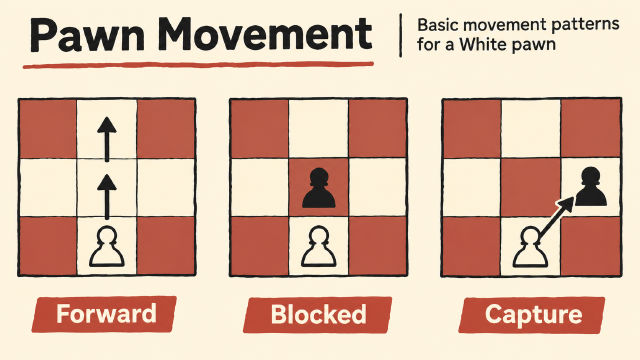 How the Pawn Chess Piece Moves, Captures and PromotesLearn how the pawn chess piece moves, captures and promotes, what its one-point value means, and what to check after a completed game.
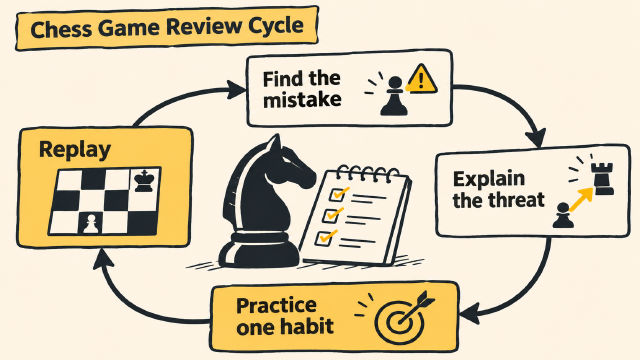 How to Win Chess Games: A Beginner’s Guide to Better DecisionsLearn how to win chess games with checkmate basics, safer pieces, tactical awareness, sensible trades and a completed-game review routine.
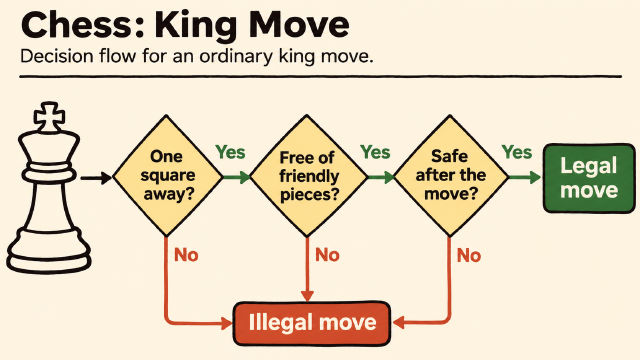 How the King Chess Piece Moves and Captures SafelyLearn how the king chess piece moves and captures, which squares are unsafe, and how to review check and king-safety mistakes in completed games.
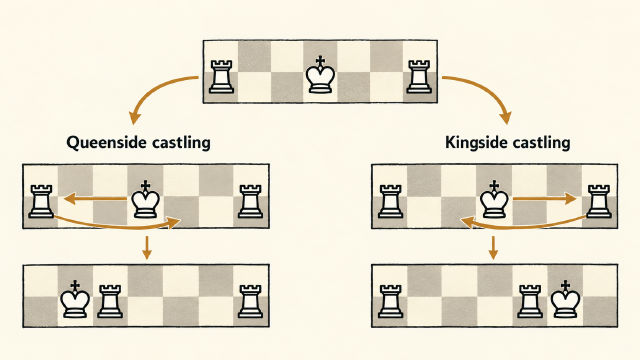 How to Castle in Chess: Kingside and Queenside RulesLearn how to castle in chess for White and Black, where the king and rook go, and how to check blocked squares, lost rights and check.
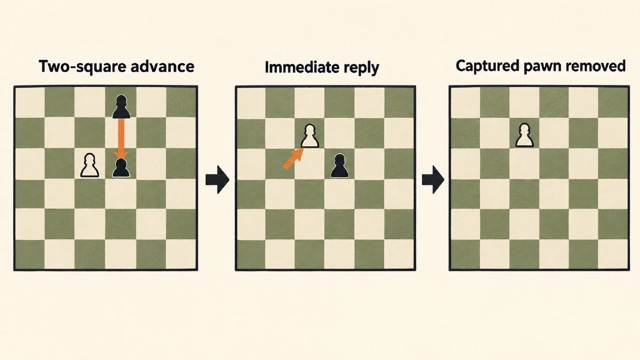 How En Passant Chess Captures WorkLearn en passant chess rules with White and Black examples, the immediate-reply requirement, and king-safety checks for completed-game review.
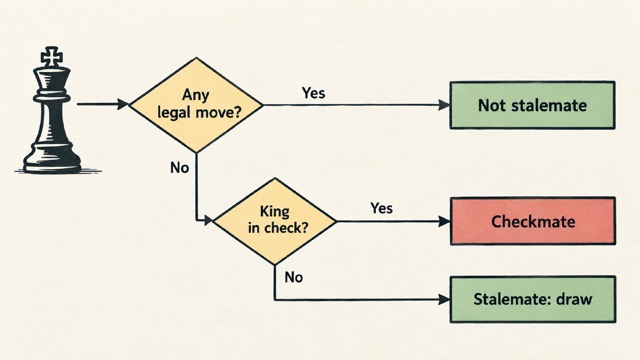 How to Recognize and Avoid Stalemate in ChessRecognize stalemate in chess, distinguish it from checkmate, and review your completed game's ending to spot how the draw happened.
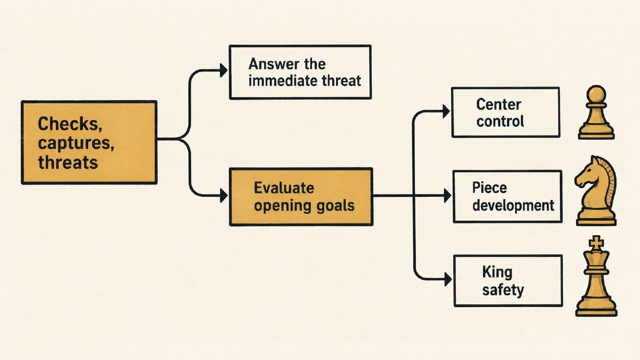 How to Choose Great Opening Moves in Chess as a BeginnerChoose great opening moves in chess with 1.e4 or 1.d4, purposeful development and king safety, then review those decisions in completed games.
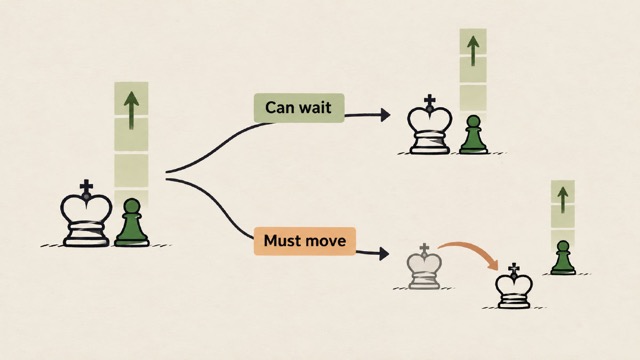 How to Recognize Zugzwang in Chess EndgamesRecognize zugzwang with a king-and-pawn example, understand why whose turn it is matters, and learn what to check in completed-game reviews.
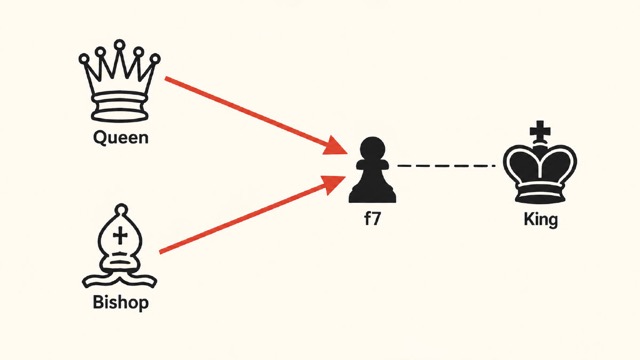 How to Recognize and Prevent Scholar's MateRecognize Scholar's Mate, understand the queen-and-bishop attack on f7, and review the defensive moves that stop the four-move checkmate.
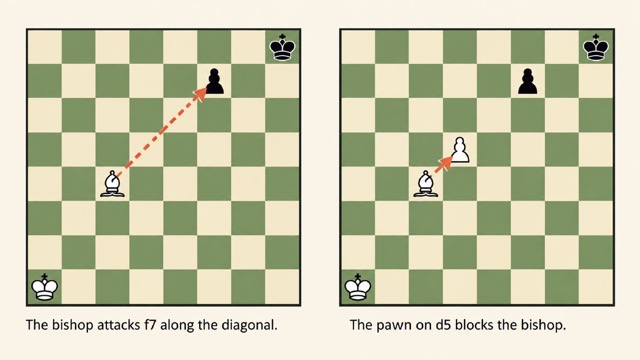 How the Bishop Chess Piece Moves and CapturesLearn how the bishop chess piece moves and captures, why blocked diagonals matter, and how its three-point value depends on the position.
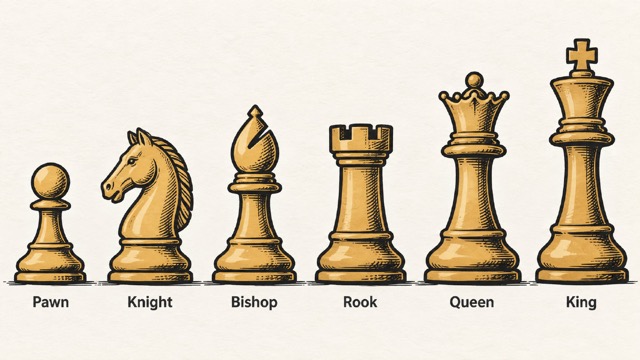 Learn Chess Character Names and Recognize Every PieceLearn chess character names, recognize the six piece types, and understand their basic moves, point values and letters in game reviews.
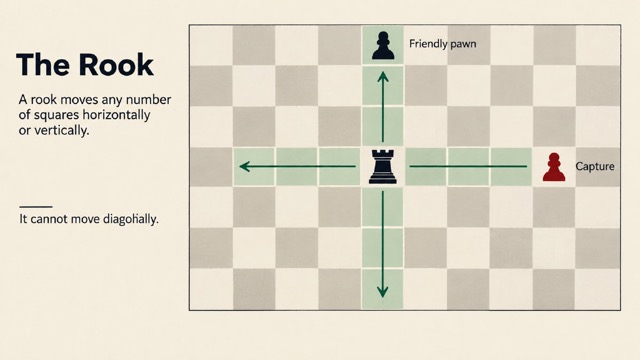 How the Rooks Chess Players Start With Move and CaptureLearn how rooks move and capture in chess, why they are worth about five pawns, and how to recognize blocked files and back-rank threats.